


Tree Injection in Tulsa
Your trees took years to grow. When bagworms, Japanese beetles or aphids move in, they can strip a tree in a single season.
We use the Arborjet trunk injection system to put insect treatment directly into the tree. The tree’s own sap carries it up to every branch and leaf where the insects are feeding. Nothing is sprayed into the air or onto your yard.
Pricing: $10 per diameter inch
A tree measuring 15 inches across costs $150.
The Tree Insects Causing the Most Damage in Tulsa
Bagworms
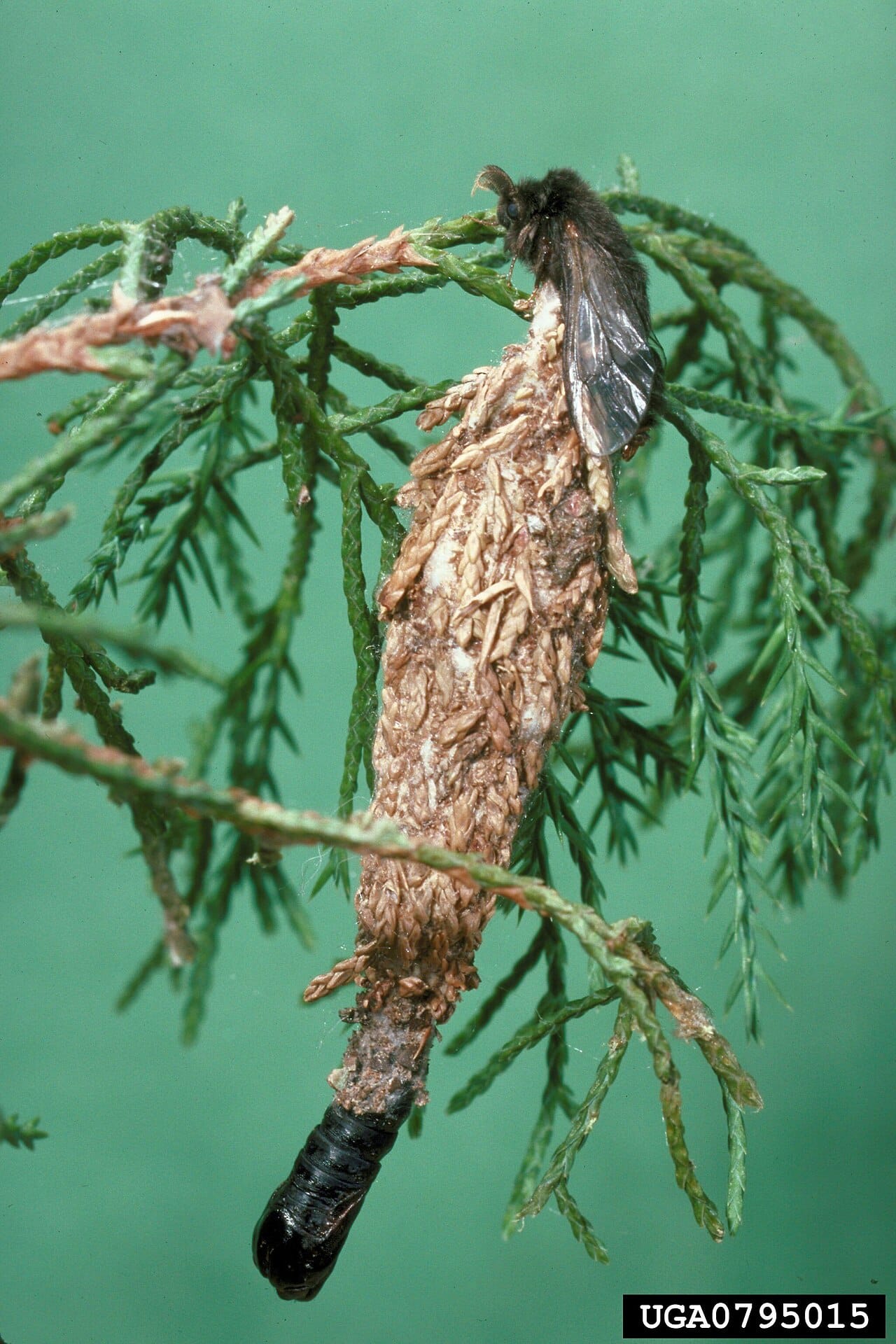
What you’ll see: small, cone-shaped bags, 1 to 2 inches long, hanging from branches like little ornaments. Each bag has a caterpillar inside, wrapped in silk and bits of your tree.
Trees they attack: cedars, junipers and arborvitae most of all, plus oaks and other trees.
Why it matters: bagworms can strip an evergreen bare. Evergreens regrow very slowly, so heavy feeding can kill branches or the whole tree, and the bags you see this year hold the eggs for next year’s infestation.
Best time to inject: spring, so the treatment is in the tree when the young caterpillars hatch and start feeding in late spring.
Bagworm photo above: Gerald J. Lenhard, Louiana State Univ, Bugwood.org, CC BY 3.0 us (Wikimedia Commons)
Japanese Beetles
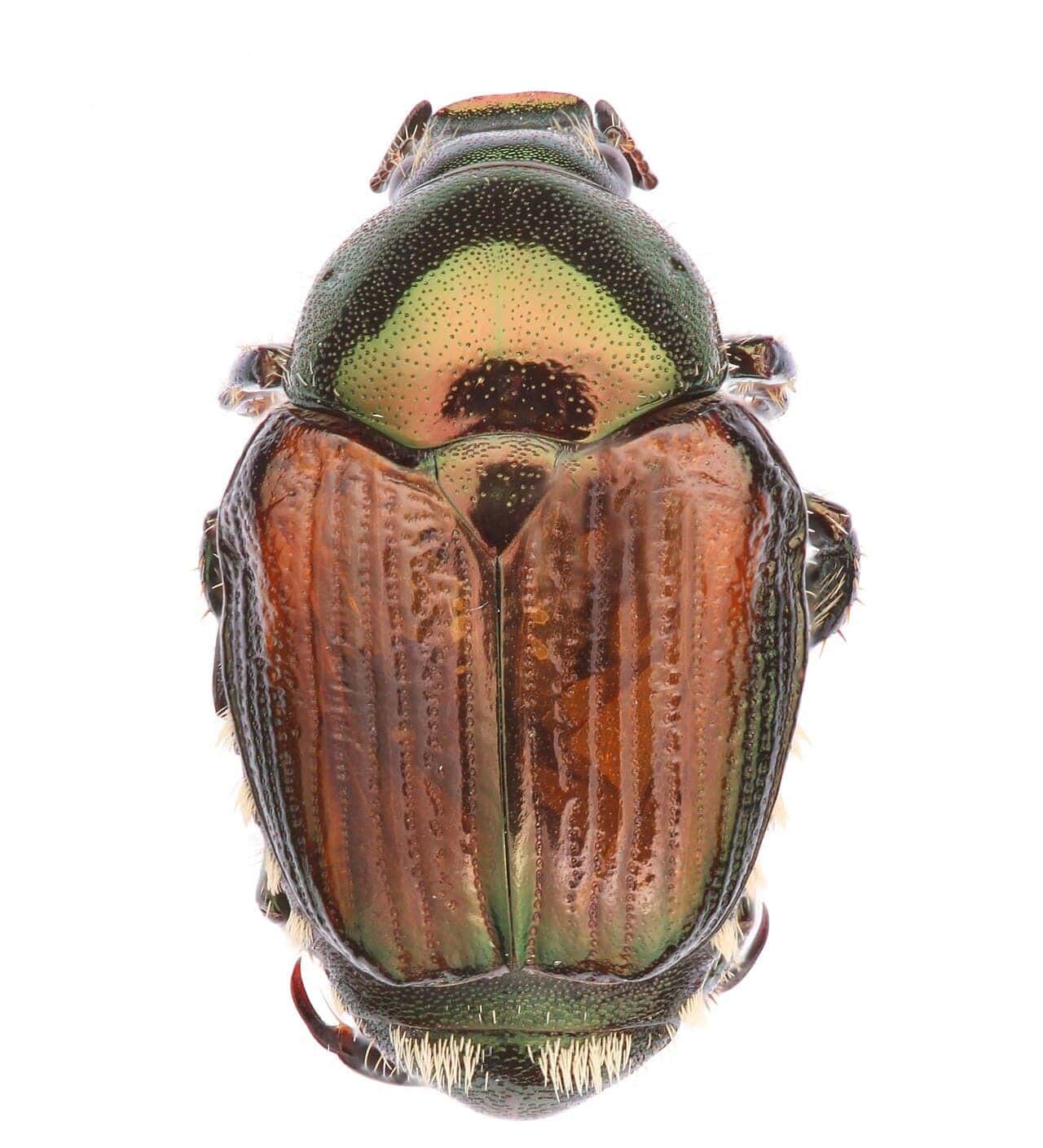
What you’ll see: shiny metallic green beetles with copper-colored wings, often in clusters. Leaves look like lace, with everything eaten except the veins.
Trees they attack: lindens, elms, maples, birch, roses and many ornamental trees.
Why it matters: they arrive in early summer in large numbers and can turn a tree brown in a few weeks. Damaged leaves also give off a scent that attracts even more beetles.
Best time to inject: spring, before the beetles show up in early summer.
Photo: Insects Unlocked, CC0 (Wikimedia Commons)
Sticky Mess on Your Car?
Aphids
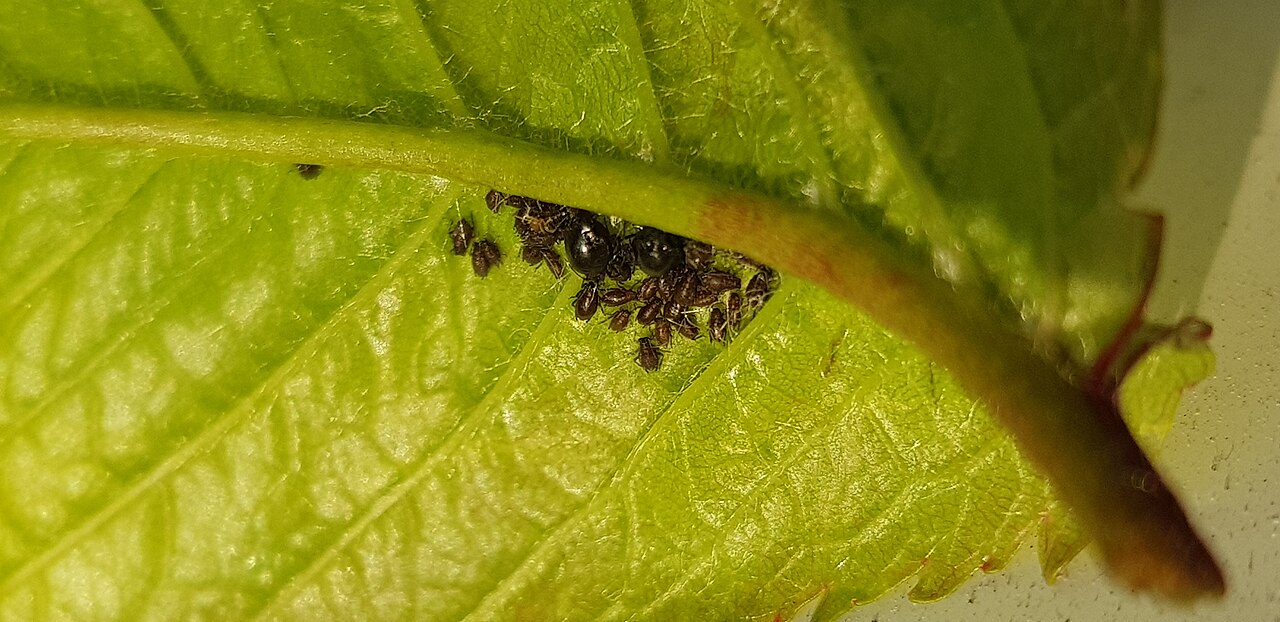
What you’ll see: curled, yellowing new leaves, and a sticky “honeydew” dripping onto cars, patios, decks and outdoor furniture that turns black with sooty mold.
Trees they attack: maples, oaks, elms, birch, crape myrtles, pecans and many others.
Why it matters: heavy infestations stunt new growth, and the sticky mess underneath the tree is often what homeowners notice first.
Best time to inject: spring, as the new leaves come out.
Photo: ML5, CC0 (Wikimedia Commons)
Emerald Ash Borer
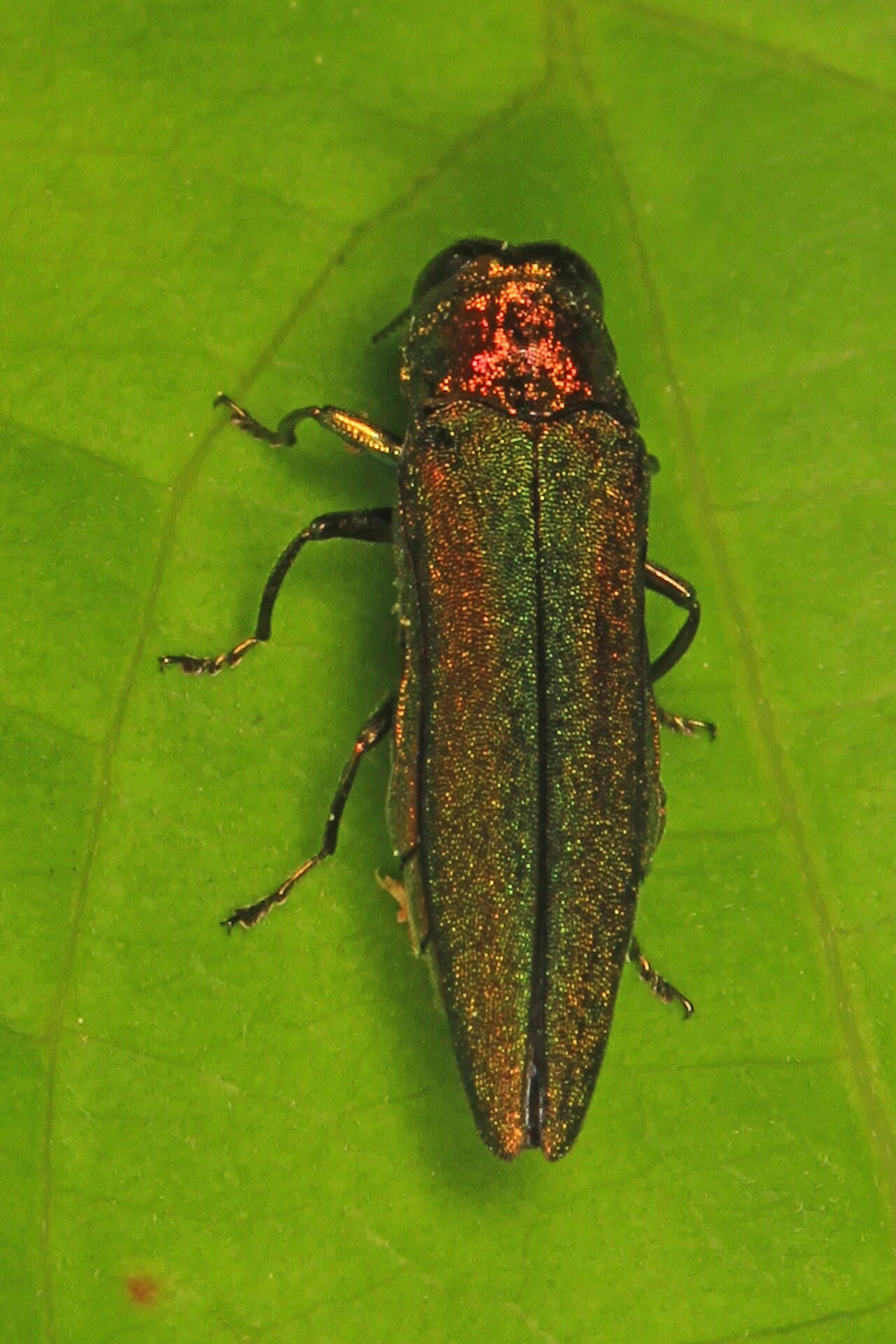
What you’ll see: thinning leaves at the top of an ash tree, small D-shaped holes in the bark, and woodpecker damage.
Trees they attack: ash trees only.
Why it matters: this invasive beetle has been found in Oklahoma, and the City of Tulsa has a program to protect its trees from it. The larvae tunnel under the bark and cut off the tree’s water and nutrients, and untreated ash trees usually die within a few years. Injection is the most effective way to protect a healthy ash, and it costs far less than removing a dead one.
Best time to inject: spring, before the tree is badly damaged.
Photo: Judy Gallagher, CC BY 2.0 (Wikimedia Commons)
How Tree Injection Works
- We check the tree. We identify the insect, look at the tree’s overall health, and measure its diameter at chest height, about 4½ feet off the ground.
- We drill a few small holes around the base of the trunk, spaced evenly around the tree.
- We set an Arborplug in each hole. It’s a small plug, about ¾ inch, that works like a one-way valve.
- We inject the treatment with our Arborjet INTELI-jet, a battery-powered injector that measures every dose and adjusts its pressure to how fast the tree takes up the treatment.
- The tree does the rest. Its natural sap flow carries the treatment up the trunk and out to the branches and leaves.
What We Inject
| Product | Active ingredient | What it controls |
|---|---|---|
| TREE-äge | Emamectin benzoate | Emerald ash borer, bagworms and other leaf-eating caterpillars. Up to 2 years of control for emerald ash borer. |
| IMA-jet | Imidacloprid | Aphids and Japanese beetles. Season-long control. |
| ACE-jet | Acephate | Fast knockdown of active aphid infestations. About 60 days of control. |
We are licensed by the Oklahoma Department of Agriculture, Food and Forestry in ornamental and turf pest control. Some of these products can only be applied by a certified applicator. Every treatment is measured to your tree’s size and applied exactly as the label directs.
Is Tree Injection Bad for the Tree?
It’s a fair question. You’re drilling holes in a tree you’re trying to save.
The short answer: a few small, sealed injection sites in a healthy tree are far less harmful than the insects they stop.
- The holes are small and spread out, spaced around the base of the trunk instead of grouped in one spot.
- Each hole gets a plug. The Arborplug seals the hole during and after treatment, so nothing leaks out and nothing gets in.
- Trees heal themselves. Trees naturally wall off wounds, and in a healthy tree the injection sites close over with new bark within a few growing seasons.
- We don’t over-treat. Treatments last a season or longer, and we use fresh spots each time.
- We’ll be honest if a tree is too far gone. If most of a tree’s canopy is already dead, injection probably won’t save it, and we’ll tell you before you spend money.
Why Injection Instead of Spraying?
- No drift. Nothing goes into the air, onto your kids, pets or garden, or over the fence.
- Reaches the whole tree. Tall trees are hard to spray all the way to the top. Injection reaches every leaf the sap does.
- Lasts longer. One injection protects a tree for a full season or more, so you’re not spraying again every few weeks.
Best Seasons and Conditions for Tree Injection
Trees take up the treatment best when they’re actively growing and drawing water, so the timing makes a big difference in how well it works.
- Spring is the best time. Trees are leafing out and moving the most water, and the treatment is in place before bagworms, Japanese beetles and aphids show up.
- Fall is the next best time. It sets the tree up for the following season.
- Mild days give the best results, roughly 50–85°F, with moist soil.
- In the summer heat, we schedule injections in the cooler morning hours, when trees take up the treatment fastest.
- Water the tree well a day or two before your appointment during dry spells.
| Season | What we treat |
|---|---|
| Early spring (March–April) | Emerald ash borer, aphids, Japanese beetle prevention |
| Late spring (May–June) | Bagworms, as the caterpillars start feeding |
| Summer | Active infestations, scheduled for cooler mornings |
| Fall (September–October) | Prevention for next season |
Tree Injection Pricing
$10 per diameter inch, measured at chest height.
| Tree diameter | Price |
|---|---|
| 10 inches | $100 |
| 15 inches | $150 |
| 20 inches | $200 |
| 30 inches | $300 |
Not sure how big your tree is? Wrap a tape measure around the trunk at chest height and divide by 3.14. Or just call us, and we’ll measure it for free when we look at it.
Tree Injection FAQ
How much does tree injection cost in Tulsa?
$10 per diameter inch. A 15-inch tree costs $150.
When should I schedule?
Spring gives the best results. It puts the treatment in the tree before bagworms, Japanese beetles and aphids start feeding.
How fast does it work?
The tree spreads the treatment through its canopy over several days to a couple of weeks, depending on its size and the weather.
Will the holes hurt my tree?
A healthy tree seals off the small injection sites on its own. Each site is plugged, and we use fresh spots each time.
Do you treat fruit and nut trees?
We don’t inject fruit or nut trees whose harvest will be eaten, such as pecans, apples or peaches, because most tree injection products are labeled for ornamental trees only. Ornamental trees that don’t bear edible fruit, like flowering pears, crabapples and flowering cherries, can usually be treated.
Do you offer tree fertilization?
Not at this time. Our tree injection service is for insect problems.
HAVE QUESTIONS ABOUT OUR SERVICES?
This company knows what they are doing. Had an outdoor wedding and all the guests kept commenting that there were no mosquitoes or flys anywhere. All thanks to Tulsa Mosquito.
Amazing customer service. Wish I would have done it sooner. 3rd year with them and I am still as pleased with the system as day one. We are able to enjoy our backyard again. What sets Kris and Stephen apart is their customer service. Highly recommend!
We're able to have supper on the patio and enjoy a cup of coffee on the front porch again! But most of all our little grandson who loves being outdoors isn't covered in mosquito bites!!
My family owns a service company and has for over 40 years, after I witnessed the quality of work from this company I instantly thought, this is why Kris is so successful. Would recommend them always.
Had our first treatment today! Steven was extremely helpful and accommodating. He definitely knows his business. I will highly recommend this service to everyone.


